
ILLINOIS LEAD LINE COST GUIDE
Lead Service Line Replacement Cost in Illinois
The cost to replace a lead service line varies by property, excavation requirements, service length, municipal requirements, and restoration. Understanding what affects the price — and what your municipality may help pay for — can significantly change your actual out-of-pocket cost.
TYPICAL ILLINOIS PROJECT RANGE $8,000 – $20,000+
Municipal reimbursement programs may reduce the homeowner's actual out-of-pocket cost by thousands.
Many residential lead service line replacement projects fall within this general range. Short, accessible services may cost less, while long, deep, or difficult replacements involving pavement, concrete, or extensive restoration can cost substantially more.
WHAT AFFECTS THE COST?
Service Line Length
Trenchless vs. Excavation
Service Line Length
Longer water services require more piping, excavation or boring, labor, and restoration.
Depth of the Line
Trenchless vs. Excavation
Service Line Length
Deeper services generally require more excavation, equipment, labor, and jobsite protection.
Trenchless vs. Excavation
Trenchless vs. Excavation
Trenchless vs. Excavation
Some properties can be completed using boring or trenchless methods, while others require traditional open excavation.
Street & Sidewalk Work
Street & Sidewalk Work
Trenchless vs. Excavation
Cutting and restoring pavement, sidewalks, driveways, curbs, or other hard surfaces can significantly affect project cost.
Water Main Connection
Street & Sidewalk Work
Water Main Connection
The location and condition of the existing water main connection, curb stop, or B-box can change the scope of the replacement.
Restoration
Street & Sidewalk Work
Water Main Connection
Landscaping, concrete, asphalt, parkway, driveway, and interior restoration can add to the final project cost.
Public Side vs. Private Side: Why It Matters
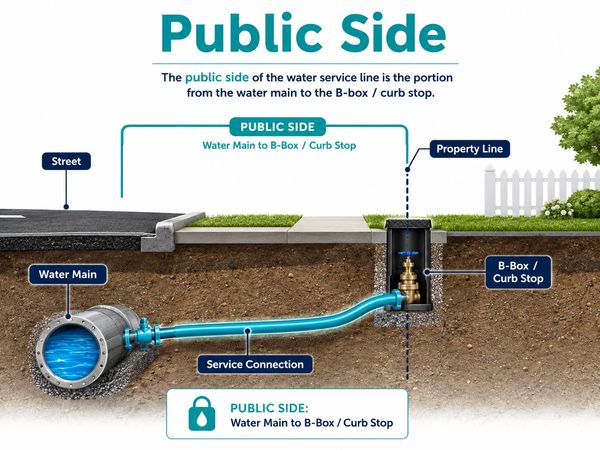
Public side
Public side generally refers to the portion between the municipal water main and the B-box or curb stop, depending on the municipality.
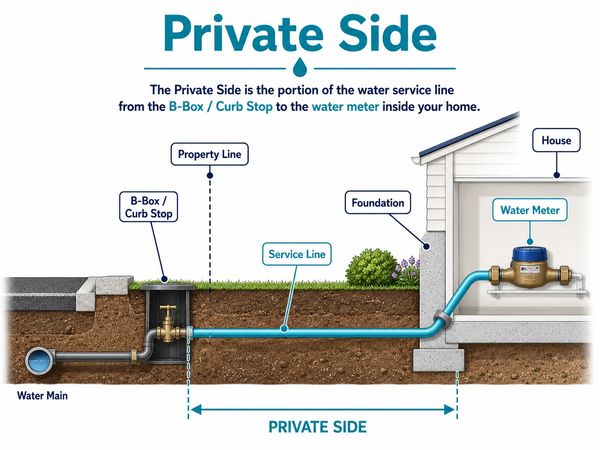
Private side
Private side generally refers to the portion between the B-box or curb stop and the water meter inside the property.
Example Lead Service Line Replacement Costs
SIMPLER PROJECT
SIMPLER PROJECT
SIMPLER PROJECT
$8,000 – $12,000
Shorter service line, good access, shallower depth, limited hardscape disturbance, and straightforward connection conditions.
COMMON PROJECT
SIMPLER PROJECT
SIMPLER PROJECT
$12,000 – $18,000
Typical suburban replacement involving excavation or boring, new water service piping, B-box work, foundation entry, meter connection, inspection, and normal restoration
COMPLEX PROJECT
SIMPLER PROJECT
COMPLEX PROJECT
$18,000 – $25,000+
Long or deep service lines, difficult access, street cuts, extensive concrete or driveway work, complex municipal requirements, or substantial restoration.
What Is Usually Included in a Full Lead Service Line Replace
Water Main Connection
New Water Service Line
Water Main Connection
Connection of the new service line to the municipal water system.
B-Box / Curb Stop
New Water Service Line
Water Main Connection
Replacement or reconnection of the exterior water service shutoff where required.
New Water Service Line
New Water Service Line
New Water Service Line
Installation of approved new piping between the municipal water main and the building.
Foundation Entry
Water Meter Connection
New Water Service Line
Bringing the new service through the foundation and properly sealing the penetration.
Water Meter Connection
Water Meter Connection
Water Meter Connection
Connecting the new water service to the existing or required new water meter.
Permits & Inspections
Water Meter Connection
Water Meter Connection
Municipal permitting, inspections, testing, and required project documentation.
Do Not Start Work Before Checking With Your Municipality
Many Illinois reimbursement programs require an application, contractor proposal, multiple estimates, municipal approval, or permits before construction begins. Starting work before completing the required steps may reduce or eliminate reimbursement eligibility.
Find Out What Replacement May Cost at Your Property
Tell us your property address and municipality. We can help identify available reimbursement programs, explain the replacement process, and determine what information is needed for an accurate project estimate.