Illinois Lead Service Line Replacement
A Homeowner’s Guide to Lead Service Line Replacement
Illinois communities are identifying and replacing lead and galvanized water service lines to reduce lead exposure and modernize aging water infrastructure. This guide explains how replacement works, what homeowners should expect, how municipal programs may help with cost, and what steps usually come before construction.
How Do I Know What My Service Line Is Made Of?
Lead
Usually dull gray, soft enough to scratch, and generally non-magnetic.
Galvanized Steel
Typically gray steel with threaded fittings and usually magnetic.
Copper or Plastic
Copper is reddish-brown and non-magnetic. Plastic service lines are typically smooth and may be blue, black, or white.

What Does Lead Service Line Replacement Usually Involve?

What Replacement Typically Includes
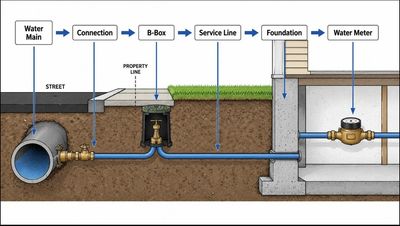
Lead service line replacement usually involves work from the municipal water main to the point where the new service enters and connects inside the home.
- Water main connection
- B-box or curb stop
- New approved service line
- Foundation entry
- Water meter connection
- Inspection and testing
- Backfill and restoration
Trenchless vs. Open Excavation
Trenchless / Boring
Best for:
Properties where minimizing surface disruption is important.
How it works:
A new service line is bored or pulled underground between excavation points rather than opening a continuous trench.
Potential advantages:
- Less yard disturbance
- May reduce sidewalk or driveway disruption
- Smaller excavation areas
- Faster restoration in some situations
Open Excavation
Best for:
Projects where site conditions, existing utilities, pipe location, or municipal requirements make trenching more practical.
How it works:
A trench is excavated along the service-line route so the existing line and surrounding conditions can be directly accessed.
Potential advantages:
- Full access to the service route
- Useful where obstructions are present
- Straightforward installation in some conditions
- May be required for certain connections or repairs